Staying Curious, Making Meaningful Connections, and Managing Over 350 Patents
Shikhar Kwatra, a Master Inventor at IBM with 350 patents, discusses curiosity, AI, and his initiative to champion women in inventing.


Resources Mentioned
Asimov's Three Laws of Robotics
Books: Blink, Nudge, Outliers by Malcolm Gladwell, Surely You're Joking, Mr. Feynman!, The Last Lecture, Tuesday's With Morrie, Thinking Fast and Slow
Guests
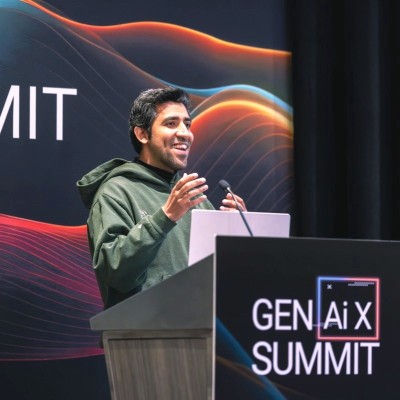
Shikhar Kwatra
Share
Watch
Listen
Overview
An Interview with Shikhar Kwatra, Data & AI Architect and Master Inventor at IBM, on curiosity, invention, and championing women in the inventing world.
Show Notes
To say I am honored to have interviewed Shikhar Kwatra is an understatement. You know when you meet someone and you just know they are going to do great things in this world? That's what it was like interviewing Shikhar. Never mind that he already has 350 patents to his name, or that he was named India's Youngest Master Inventor, or that he created a program to help female inventors get their inventions patented, or that he went to Columbia for his Master's degree - never mind any of that - he is a good human and more humble than you would expect someone with his accomplishments to be.
Our interview covered many topics and at the top of the list is curiosity. Makes sense since Shikhar invents things for a living. To resolve my own curiosity, I had to ask about Artificial Intelligence and whether Shikhar thought it was dangerous. I know, I know, I'm sure I've watched one too many SciFi or Marvel movies and my fear is unwarranted, but I know I'm not the only one thinking it. I appreciated Shikhar's thoughtful response and explanation. His ability to embrace "there are no stupid questions" made me feel heard in my line of questioning.
Shikhar mentioned something called Asimov's Law, which I didn't know about and I'm betting those of you who aren't tech geniuses might not know about either. Here's a simple breakdown:
Asimov’s Three Laws are as follows:
1. A robot may not injure a human being or, through inaction, allow a human being to come to harm.
2. A robot must obey the orders given it by human beings except where such orders would conflict with the First Law.
3. A robot must protect its own existence as long as such protection does not conflict with the First or Second Laws.
Additional information about Asimov's Law: https://en.wikipedia.org/wiki/Three_Laws_of_Robotics (Yes, I know it's Wikipedia, it was comprehensive and unbiased.)
Murphy's Law was also mentioned during our AI conversation and while this is a more commonly known "law," here is the official definition: Anything that can go wrong will go wrong.
Here is an additional resource about Murphy's Law: https://www.mindtools.com/pages/article/newSTR_MurphyLaw.htm
Shikhar also mentioned the work being done at Boston Dynamics, which you can check out here: https://www.bostondynamics.com
Along with all the science talk, we discuss Shikhar's journey to where he is now and how a well-interrupted conversation jump-started his road to 350 patents. As ambitious and driven as Shikhar appears to be, there is also an ease about him that many of us try to have in our careers. While he does mention there is stress, we also have a robust discussion about why you shouldn't be comparing yourself to others and how we need to surround ourselves with professionals and people who support what we are doing in our lives.
The old adage of "you're a combination of the 5 people you spend the most time with" rings true in Shikhar's world and he hopes to continue to surround himself with like-minded individuals while also bringing up new inventors and professionals interested in his world. This includes a special initiative he launched called "Women In Inventing Initiative" because he realized that only about 20% of US Patents are created by women. His commitment to equity and championing women in tech and the inventing world was a bright spot in our already amazing conversation.
For those interested in Shikhar's type of work - we go through how he got to where he is now and he gives some insight into those who want to start inventing as well.
I HIGHLY recommend you follow Shikhar's work on LinkedIn.



Subscribe to Control Your Career